
Mission Accomplished Phase 1
ASU Honors College

If you’ve followed my writing here, you already know about the controversy surrounding Arizona State University’s Barrett Honors College. Its faculty opposed visits by Charlie Kirk and Dennis Prager, successfully keeping them from speaking at the college. They even chased away a donor who had given several million dollars because he was considered too conservative.
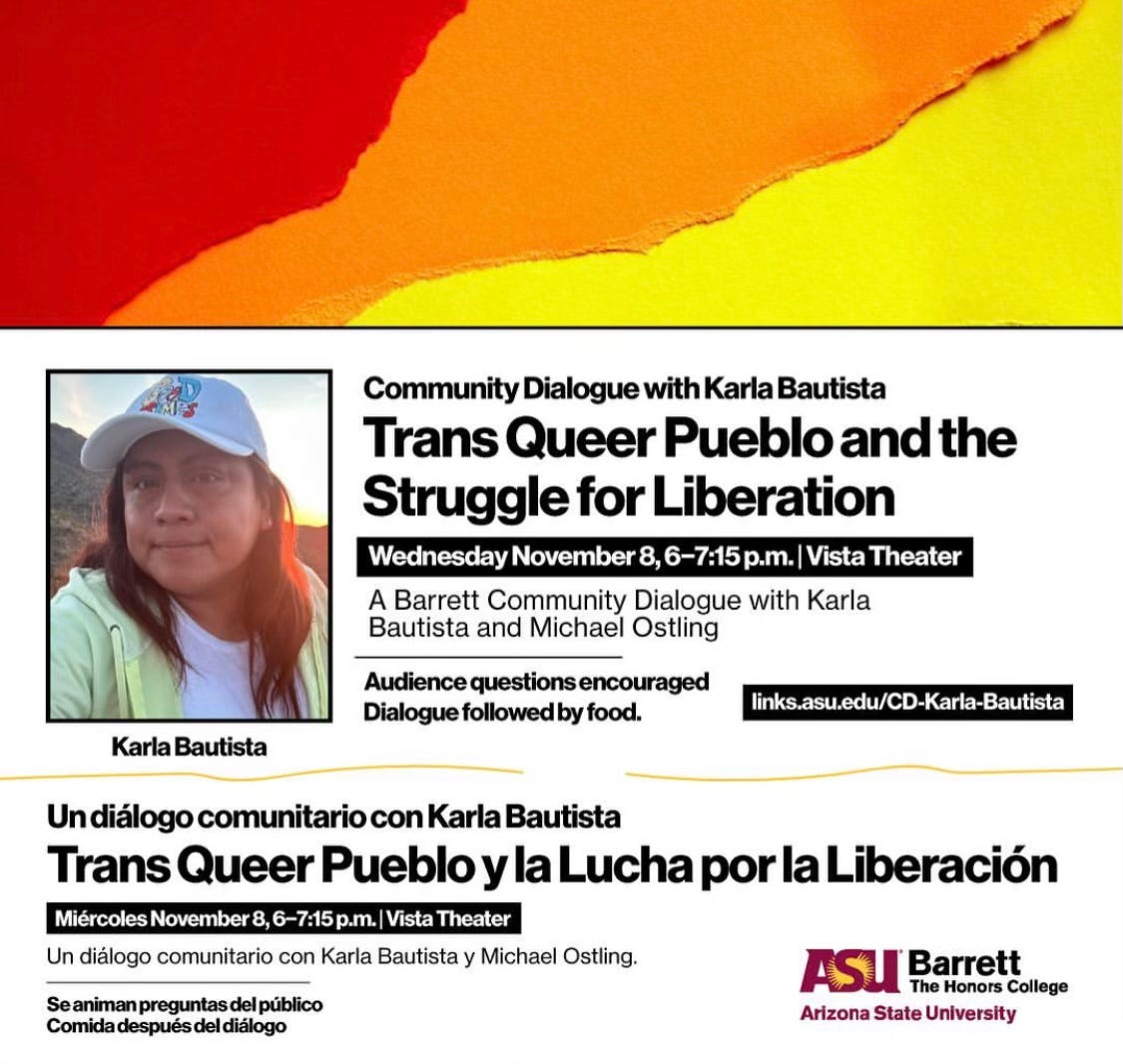
I have also documented how the honors college pushed teaching about the supposed benefits of witchcraft and the evils of “settler-colonialism.” If you think I’m exaggerating, you can go back and read the articles where I linked directly to the events and course content.
Now comes the interesting part.
This week Barrett was ranked #1 by US PrepScholar, which described it as “a top residential honors program, offering specialized, small-college experiences with the resources of a large, top-tier research university.” Prospective students and their parents are told that Barrett’s core classes (the human event) revolve around discussion of the great books and the big questions of civilization.
But, as I have shown, the reality has often been quite different.
Yet, something has changed.
If you look at Barrett’s current course listings, you will notice that the classes on witchcraft and settler-colonialism have largely disappeared (you’re welcome). The offerings now include far more practical and real-world topics, many of them connected to healthcare and other applied fields.
That is good news.
But parents and students should not assume that the underlying worldview of the instructors has suddenly changed. The same people who promoted courses celebrating witchcraft and condemning “settlers” are still there.
Choosing classes at a university should be approached the same way you shop for food. You want healthy food going into your body. How much more should you care about what ideas go into your mind? When a product markets itself as “organic,” you still have to read the nutrition label to see what that actually means.
The same rule applies to college courses.
Look carefully at the professor biographies. Those short descriptions often reveal—sometimes explicitly, sometimes indirectly—how a professor understands the world. There you will still find the familiar themes: witchcraft, cultural relativism about beauty and morality, anti-settler philosophy, and DEI ideology repackaged under softer terms like “inclusion.”
ASU rightly celebrates inclusion as a principle of welcoming students from all backgrounds. But some activists have co-opted that word to mean something quite different: a system where some groups are more included than others. That is not inclusion at all. It is simply neo-segregation wrapped in new language. It is the Marxist dialectic of “oppressor/oppressed” taught to the honors students as compassion and empathy.
The standard objection: are you saying we shouldn’t teach all perspectives? No, I’m saying let’s start doing that. Why is only this perspective taught? Why not also have a session on liberation from the power of lust?
I have repeatedly invited ASU professors to debate these issues publicly.
So far, there have been zero takers.
Which raises an obvious question: if these ideas are as enlightened and progressive as their advocates claim, why is no one willing to defend them in an open debate?
Parents and students deserve an answer.
Thank you, sir, for hanging in there. But this is a State school, is it not? Taxpayer funded? Might the legislature or individual legislators take a certain interest in things?